Being easy to reach can be useful at work. Being expected to respond to everything immediately is another matter. In some workplaces, fast replies gradually become an informal signal of availability and reliability, even when a message is not genuinely urgent. A colleague sends a chat message at 2:15 PM, the notification appears on screen, and suddenly the unanswered message feels more important than the report already on the screen.
That creates a difficult tension. Important professional work often requires uninterrupted time for writing, analysis, coding, planning, design, and problem-solving. Those tasks rarely become better simply because another message was answered thirty seconds faster.
The answer is not to disappear from communication altogether. It is to make accessibility more predictable. When colleagues understand which channels are monitored closely, when routine messages are handled, and how genuinely urgent matters should be escalated, focused work becomes easier to protect without turning communication into a guessing game.
The workplace often presents two extremes: stay constantly available or become difficult to reach.
There is a more practical middle ground.
A person can be responsive without monitoring every communication channel every minute. The key is predictability. If a team knows that routine messages are normally answered during certain periods, while urgent issues use a separate channel, there is less reason to expect an immediate response to everything.
This works best when the arrangement matches the role. Someone handling customer support or live operations may need to monitor messages continuously. Someone preparing a detailed financial analysis may need longer periods without interruption.
The right communication rhythm depends on the work.
A useful way to design that rhythm is to separate communication by urgency.
Routine communication includes ordinary questions, status updates, non-urgent requests, and messages that can wait for a few hours.
Priority communication covers matters that need a relatively quick response but do not require an immediate interruption.
Emergency communication is reserved for situations where waiting is genuinely impractical.
The exact channels will vary by workplace. A team might use email for routine matters, chat for priority questions, and a phone call for emergencies. Another organization may use a completely different arrangement.
What matters is that the distinction is clear.
Without an agreed system, every notification looks equally urgent. With one, people have a reasonable way to judge whether an interruption is necessary.
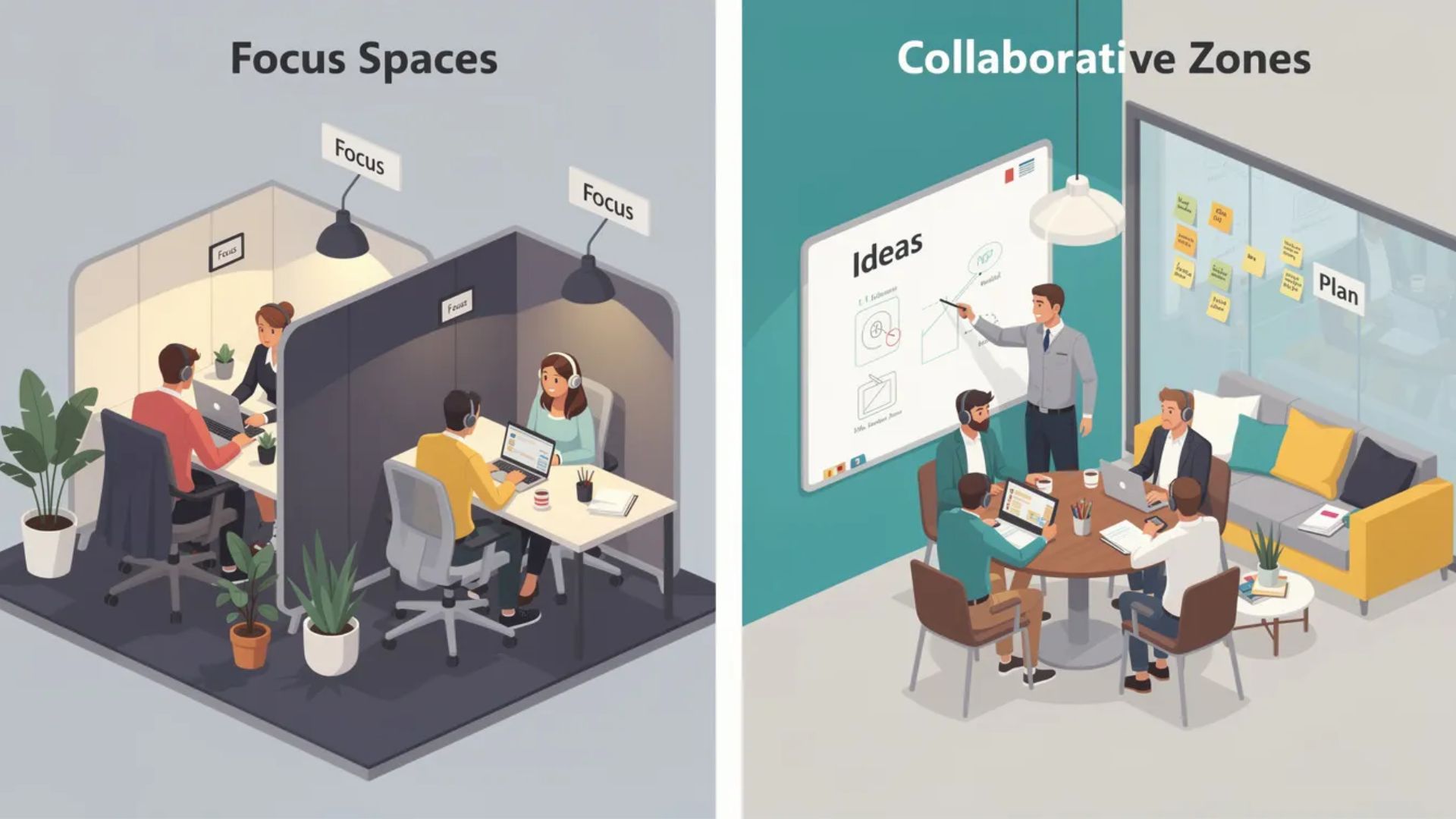
Instead of leaving every chat application open and monitoring it continuously, set predictable periods for routine communication where the job allows it.
For example, someone might review messages at the beginning of the day, after lunch, and later in the afternoon. The timing does not need to be identical every day, and certain roles may require much more frequent checks.
The benefit comes from separating communication from focused execution.
Rather than asking, “Should I answer this message right now?” every few minutes, there is already a default answer: routine messages will be handled during the next communication window unless they arrive through an agreed priority channel.
That small change removes a surprising number of unnecessary decisions.
Silence can be confusing when nobody knows what it means.
A simple status message can solve much of the problem. Something as straightforward as “Focused on a project until noon; checking messages afterward” gives colleagues useful information without requiring a long explanation.
Calendar blocks can serve the same purpose. A visible focus period tells other people that the lack of an immediate response is intentional rather than accidental.
This is particularly useful for distributed teams, where colleagues cannot tell from physical surroundings whether someone is writing a report, sitting in a meeting, or simply away from the computer.
Clear expectations make temporary unavailability much easier to accept.
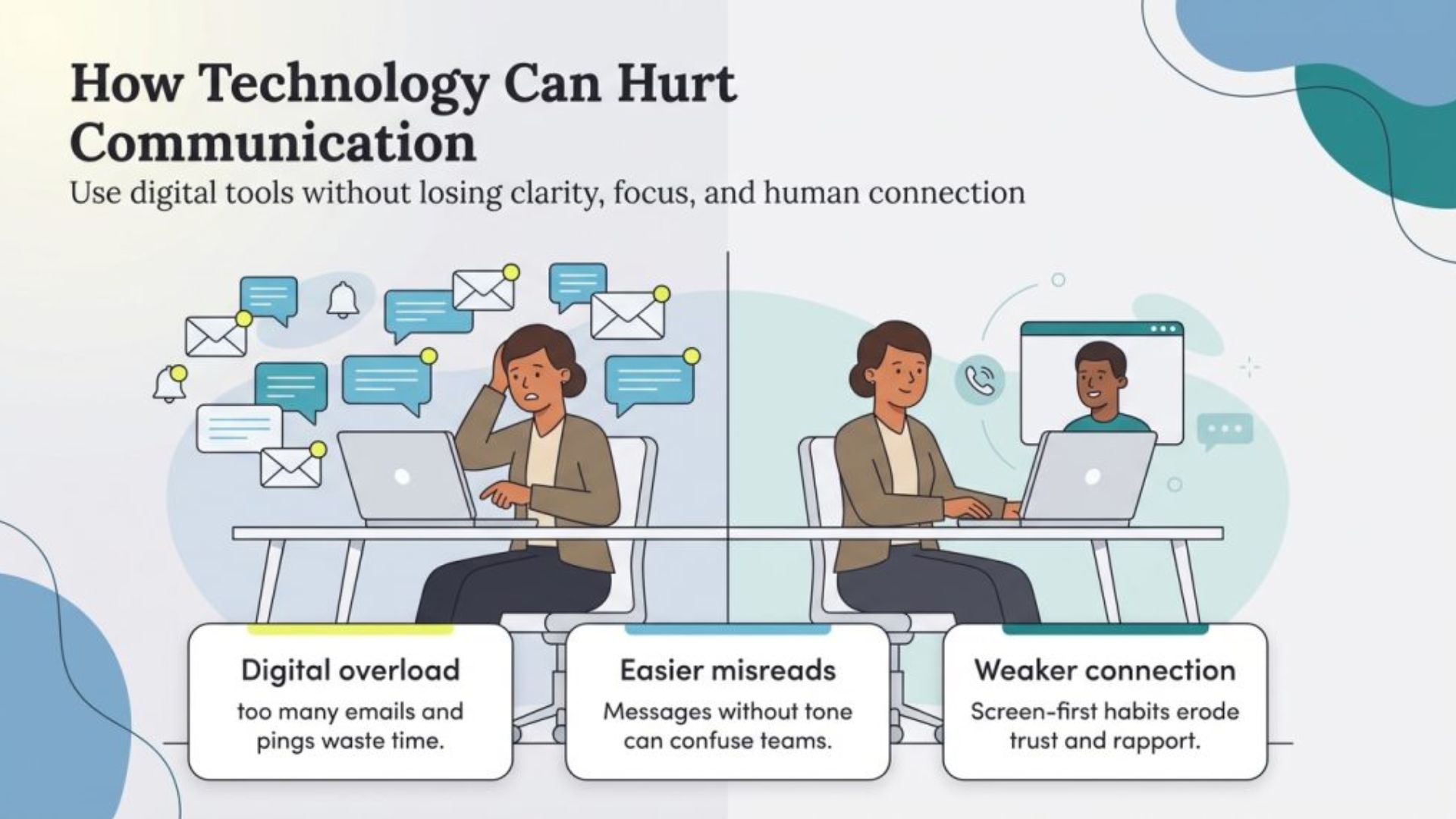
The biggest objection to focus periods is usually simple: What if something important happens?
The solution is not to keep every notification active just in case. Create an override.
For example, a team might agree that urgent matters should be handled by a direct phone call rather than a routine chat message. Another workplace might use a designated priority channel or escalation procedure.
The details depend on the organization, but the principle is the same: focused work should have a door, not a wall.
People can work without checking every channel constantly when they know there is a reliable way to get their attention if something truly cannot wait.
Maintaining focus can become difficult when managers interpret delayed replies as a lack of engagement.
The most useful conversation is usually about how communication practices affect the actual work. Rather than presenting focus time as a personal preference, explain what the uninterrupted period is intended to accomplish.
For example:
“I can respond to routine messages throughout the day, but uninterrupted time in the morning helps me finish the analysis before the afternoon review.”
That frames the boundary around a deliverable rather than personal convenience.
It also leaves room for discussion. Some roles genuinely require fast responses, and a manager may have legitimate reasons for expecting a particular level of availability. The objective is to agree on a workable rhythm rather than assume that every job should follow the same model.
Many workplaces use several communication tools at once. Email handles one type of message, chat handles another, project-management software produces updates, and calendar systems generate their own reminders.
The result can be a steady stream of alerts from different directions.
Where possible, assign a clear purpose to each channel. For example, routine documentation might stay in email, project discussion might happen in the team's collaboration platform, and genuinely urgent matters might use a designated escalation method.
The goal is not necessarily to reduce the number of tools. It is to reduce ambiguity about which tools deserve immediate attention.

Most modern devices and workplace applications offer ways to silence notifications during scheduled periods or display a temporary status.
These features are useful because they remove the need to make the same decision manually every day.
A recurring focus period can mute routine alerts automatically. A status can indicate when a person is unavailable. Calendar integrations can communicate meeting schedules without requiring additional messages.
Automation is especially useful for repetitive boundaries. If the same setting needs to be changed every morning and every afternoon, there is a good chance it can be automated.
A focus system should not become so rigid that it makes collaboration difficult.
There will be days when a client needs a rapid answer, a project enters a critical phase, or several people need to solve a problem together. During those periods, normal communication windows may need to change.
That is not failure.
The purpose of a communication system is to create a useful default, not an unbreakable rule. When circumstances change, the rhythm can change with them.
The important distinction is between intentional availability and automatic availability.
After trying a new communication rhythm for a few weeks, look at the results.
Are important messages still being answered on time? Are colleagues clear about how to reach you? Are projects moving forward? Is there more uninterrupted time for complex work? Are urgent issues being escalated effectively?
If the answer to any of these questions is no, adjust the system.
Perhaps communication windows need to be more frequent. Perhaps the priority channel is being overused. Perhaps the role requires more real-time availability than expected.
A good system is not one that looks perfect on paper. It is one that works under real conditions.
The goal of a connected workplace should not be to make everyone unreachable. It should be to make communication easier to understand.
Routine messages can wait. Priority matters can have a defined response path. Genuine emergencies can bypass normal focus periods. Colleagues can see when someone is concentrating on important work instead of wondering whether a delayed response means something is wrong.
That balance makes deep focus more realistic without sacrificing reliability.
Being responsive does not require being permanently available. A well-designed communication rhythm gives people both: a dependable way to reach one another when it matters and enough uninterrupted time to produce work that requires real concentration.
