A decade ago, most households treated networking equipment as an appliance rather than a security system. A router arrived from an internet provider, the default settings remained untouched, and the network simply delivered internet access to a small collection of devices. That assumption no longer reflects reality. Many homes now support remote work, online banking, cloud storage, smart speakers, streaming devices, connected doorbells, gaming consoles, and dozens of Internet of Things (IoT) products that continuously exchange data in the background. The home network has quietly evolved into a miniature digital ecosystem with many of the same challenges that once belonged exclusively to corporate environments.
Yet consumer behavior has not evolved at the same pace as household technology. Administrative passwords often remain unchanged, firmware updates are postponed indefinitely, and inexpensive smart devices are connected to the same wireless network as work laptops and personal smartphones. This creates an environment in which one poorly maintained device can expose a much larger collection of systems. Building a more resilient network does not require enterprise-grade hardware or advanced technical expertise. It requires understanding how devices communicate, identifying the most common weaknesses, and adopting a few architectural principles that reduce unnecessary exposure.
The biggest misconception about home networking is the belief that every connected device carries the same level of risk. In reality, devices vary dramatically in how they are designed, updated, and maintained. A modern laptop running an actively supported operating system typically receives frequent security patches, built-in firewall updates, and browser protections. By comparison, a low-cost smart plug or connected appliance may receive only a handful of firmware updates during its entire lifespan. Some products depend on outdated software components, while others rely on manufacturers that disappear from the market within a few years, leaving unsupported devices permanently connected to the internet.
Another overlooked issue is that many homes still operate as flat networks. In a flat network, every device exists within the same local environment and can potentially communicate with every other device. That means a compromised smart camera could theoretically interact with a desktop computer storing financial documents or a work laptop containing sensitive business information. Attackers do not always target the most valuable device first. Instead, they often look for the least protected entry point and then move laterally through the network. Recognizing that risk is the first step toward building a safer architecture that limits unnecessary communication between devices.
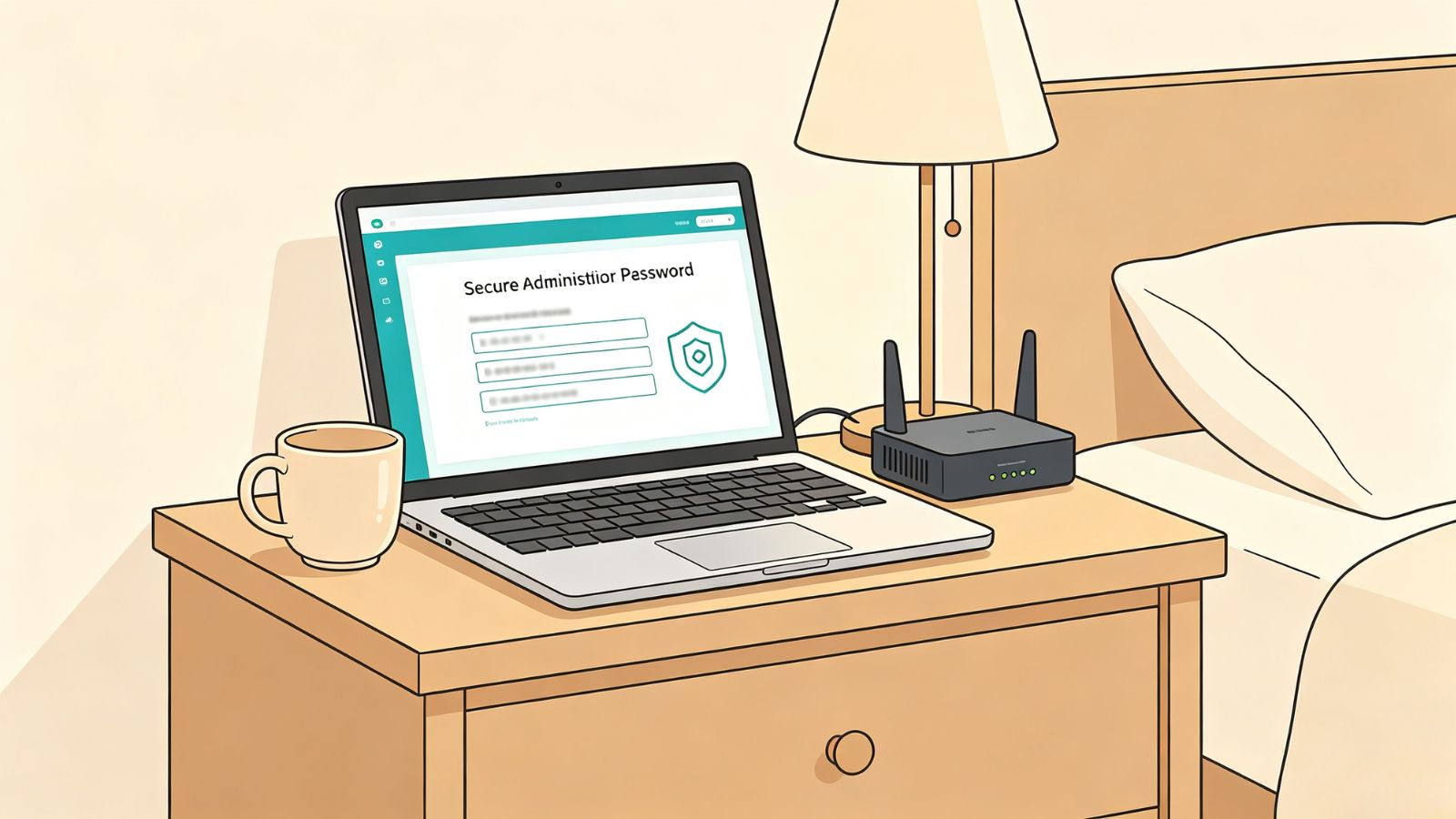
The router remains the most important security component in a home network because it controls how devices connect to both the local environment and the broader internet. Unfortunately, many households never access the router's administrative dashboard after the initial installation. This allows weak default configurations to remain active for years. Replacing factory credentials with a long and unique administrator password should be the first priority. Administrative passwords should never be reused across websites or online accounts, and they should be stored in a reputable password manager rather than written on paper or saved in a browser note.
Firmware maintenance deserves equal attention. Routers function as specialized computers that run operating systems, manage wireless protocols, and process network traffic. Like any other computer, they contain software vulnerabilities that manufacturers periodically correct through updates. Automatic updates should be enabled whenever possible, and older devices that no longer receive security patches should be replaced instead of retained indefinitely. Users should also review optional features such as remote administration, Universal Plug and Play (UPnP), and unnecessary port-forwarding rules. Disabling features that are not actively needed reduces the number of external pathways that attackers can potentially exploit.
One of the most effective security strategies borrowed from enterprise networking is segmentation. Rather than placing every device on a single wireless network, segmentation divides devices into separate groups according to their function and level of trust. Fortunately, many modern consumer routers already support guest networks, multiple wireless networks, or basic network isolation features that make segmentation easier than many people expect. Even without advanced knowledge of virtual local area networks, households can create meaningful boundaries between categories of devices.
A practical approach begins by establishing a primary network dedicated to laptops, desktop computers, tablets, and smartphones that regularly access financial accounts, cloud storage, work applications, and personal communications. A second network can be reserved for IoT devices such as televisions, cameras, smart speakers, thermostats, and connected appliances that primarily require internet access rather than local communication. A separate guest network can then provide temporary access for visitors without exposing shared folders, printers, or smart home management systems. This structure limits the potential damage caused by a compromised device because threats remain confined within a more narrowly defined environment rather than spreading freely across the entire household.
Wireless security standards have improved significantly over the past several years, but many households continue to rely on legacy configurations because older devices remain connected to the network. Whenever possible, routers should be configured to use WPA3, which strengthens encryption and improves resistance to password-guessing attacks. If certain devices support only older standards, mixed compatibility modes may be necessary, but those devices should be isolated from systems that manage sensitive information. A strong wireless passphrase remains essential regardless of the encryption standard in use, and predictable combinations based on addresses, birthdays, or common words should be avoided.
Network protection should also extend beyond the router itself. Every computer, smartphone, and tablet should maintain its own security controls because layered defenses reduce the consequences of a single failure. Operating system firewalls should remain enabled, automatic updates should be activated, and unused applications should be removed periodically. Browser extensions, media applications, and third-party utilities deserve particular attention because they often introduce additional permissions and background processes. Security works best when multiple independent safeguards overlap rather than relying on a single protective barrier.
Many people approach cybersecurity as a one-time configuration project, but home networks change continuously. New devices are added during holidays, old hardware remains connected after it stops receiving support, and family members install applications that introduce new dependencies without realizing it. Periodic reviews help identify devices that no longer belong on the network and highlight unusual activity before it develops into a larger problem. Checking the router's connected-device list every few months provides a surprisingly effective way to identify forgotten hardware and unexpected connections.
Long-term security depends less on expensive equipment and more on consistent administrative habits. Households that maintain updated routers, isolate vulnerable devices, remove unnecessary features, and review network activity regularly dramatically reduce their exposure to common threats. Perfect security does not exist, especially in environments filled with diverse hardware from multiple manufacturers. However, thoughtful network design transforms the home router from a simple internet gateway into a deliberate security boundary that protects computers, phones, smart devices, and the increasingly interconnected digital lives that depend on them.
