
Building a personal knowledge base often starts with good intentions. People save articles, summarize books, collect research materials, and record ideas they want to revisit later. However, after months or years of accumulation, many note systems face the same problem: they contain plenty of information but provide little practical value.
A large archive does not automatically improve productivity. Notes become useful only when they influence real projects, support important decisions, or help solve recurring problems.
The purpose of a personal knowledge management system is not simply to preserve information. It is to create a bridge between what you learn and what you do. By connecting notes with active projects, decisions, and long-term goals, a knowledge base can become a practical tool for thinking and execution.
One of the most common challenges in digital note-taking is creating a gap between collecting and applying information.
A user may save a useful article about communication strategies, record ideas from a business book, or create detailed research notes about a technical topic. However, if those notes remain untouched inside a storage system, their value gradually decreases.
This happens because collecting information feels productive, while applying knowledge requires additional effort. Reading, saving, and organizing are relatively simple actions. Turning information into decisions, strategies, or finished work requires deeper thinking.
A useful knowledge system needs a clear connection between notes and real-world activities. Instead of asking only, "What information should I save?" consider asking, "Where could this information be useful?"

A practical way to connect notes with action is organizing them around current priorities rather than only broad topics.
Projects are temporary efforts with a specific outcome and completion point. Examples include writing an article, launching a product feature, preparing a presentation, or researching a specific topic.
Areas are long-term responsibilities that require continuous attention. Examples include professional development, personal finance, health management, or improving technical skills.
When creating or reviewing a note, consider whether it supports:
A current project that needs progress
An ongoing responsibility that requires improvement
A future possibility worth exploring
This simple filter helps prevent a common problem: collecting interesting information that has no connection to current priorities.
Not every useful idea needs to become part of a permanent archive. A smaller collection of relevant notes is often easier to use than a large database filled with disconnected information.

A well-maintained knowledge system can also support important decisions. Instead of making choices based only on recent experiences or incomplete information, users can review previous research, observations, and lessons learned.
For example, when evaluating a new business strategy, selecting software tools, or planning a career change, previous notes can provide useful context.
A simple decision record can help connect knowledge with action:
1. Collect relevant information
Review notes, research summaries, and previous experiences related to the decision.
2. Compare options and limitations
Write down the advantages, disadvantages, risks, and assumptions behind each choice.
3. Record the reasoning
Document why a decision was made, including important evidence and factors considered.
Keeping these records creates a valuable reference for future reviews. When results become clear months later, you can understand which assumptions were correct and which areas need improvement.
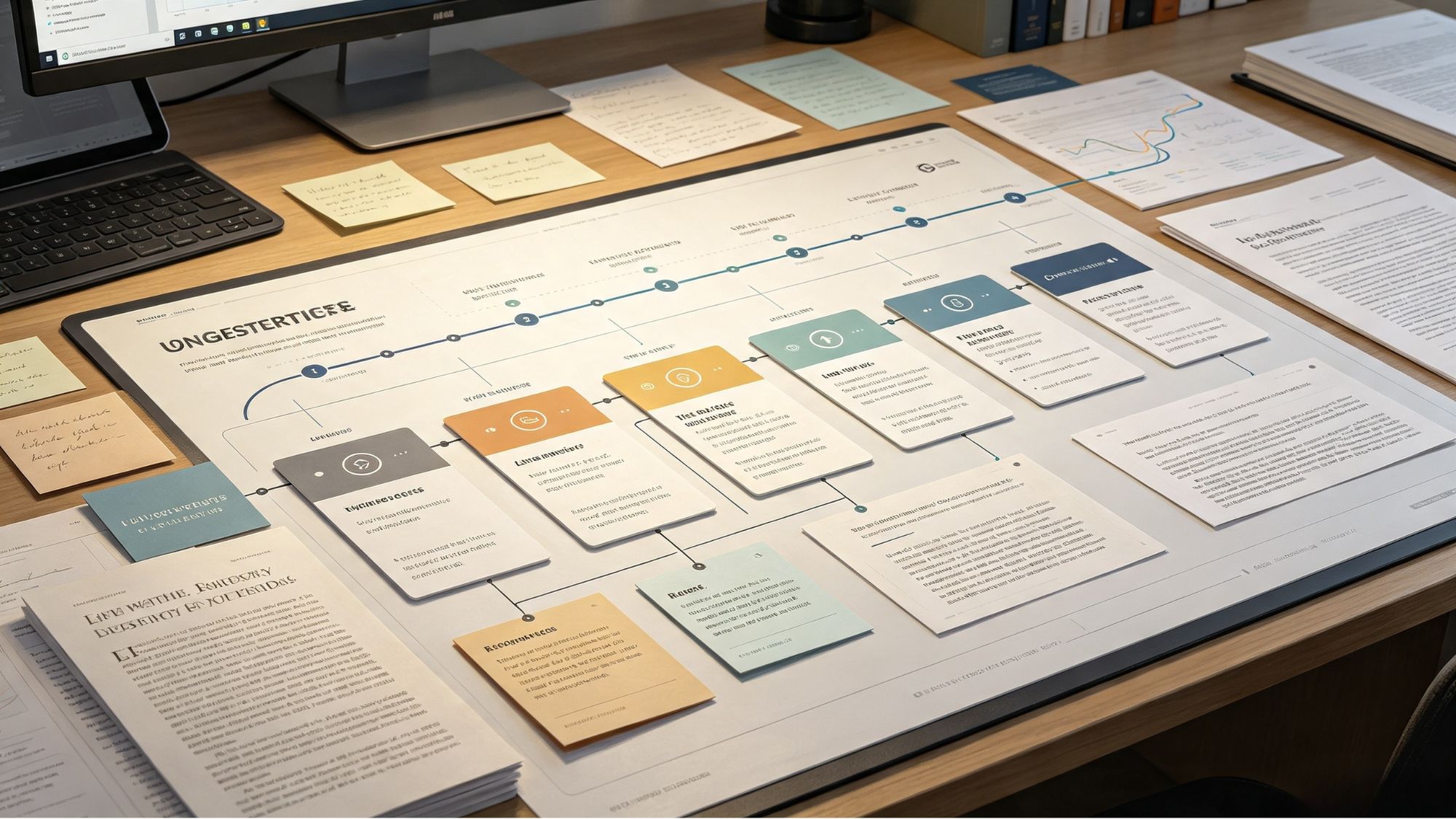
Long-term goals often fail because they remain separate from everyday activities. A goal such as improving professional skills or becoming a better writer can feel too broad without a connection to daily actions.
Notes can help create that connection.
For example, someone working toward becoming a stronger technical writer might organize research around:
Writing structures and communication techniques
Audience analysis
Industry trends
Publishing practices
Regular reviews can reveal whether your learning activities match your intended direction. If your notes consistently focus on topics unrelated to your goals, your information habits may need adjustment.
A knowledge base becomes more useful when supported by simple maintenance routines.
Before beginning a project, review related notes first. Previous research may reveal useful ideas, prevent repeated work, or provide solutions to problems you have already explored.
When a project ends, move outdated materials out of the active workspace. Extract important lessons into permanent notes while keeping temporary files separate.
When saving a new note, include a short explanation of why it matters. A sentence describing the possible application can make the note much more valuable months later.

A personal knowledge system should not function as a digital storage room filled with forgotten information. Its real value comes from helping users connect ideas with projects, decisions, and long-term objectives.
By organizing notes around practical needs, reviewing information before important tasks, and recording the reasoning behind decisions, a knowledge base becomes an active thinking tool rather than a passive archive.
The goal of note-taking is not to collect everything. It is to build a system that helps transform information into better decisions, stronger skills, and meaningful results.
