
Building a personal knowledge base often starts with excitement. Many people discover digital note-taking methods, experiment with new apps, create detailed templates, and design systems that promise better organization and easier access to information.
At first, the process feels productive. Every article, idea, meeting summary, and research note seems like another valuable piece added to a personal library.
However, problems often appear as the collection grows. Notes accumulate faster than they can be reviewed, tags become inconsistent, and maintaining the system starts requiring more effort than actually using it. A tool designed to support thinking can gradually become another administrative responsibility.
A sustainable knowledge management system does not require perfect organization. The goal is not to create a flawless archive of everything collected, but to build a lightweight system that helps retrieve useful information when it matters.
One of the biggest challenges in personal knowledge management is creating a system that is too complicated from the beginning.
Many users spend significant time designing detailed folder structures, complex tagging rules, and advanced templates before they have developed a consistent note-taking habit. While these systems may look impressive, they often introduce unnecessary decisions into everyday workflows.
Every additional organizational requirement creates another step between having an idea and recording it.
For example, if saving a simple observation requires choosing a folder, selecting multiple tags, filling metadata fields, and formatting the note, the process becomes slower and less natural. Over time, users may delay capturing information because organizing it feels like a separate task.
A practical system should make capturing ideas easy first. Organization can happen later when the information proves useful.
Automation can reduce repetitive work, but not every connection or category needs to be created manually.
Some users spend large amounts of time building elaborate linking systems between notes that have little practical relationship. A knowledge base should support discovery, but it should not become a project that requires constant management.
The most valuable connections usually appear naturally when a note becomes relevant to a real project or decision.
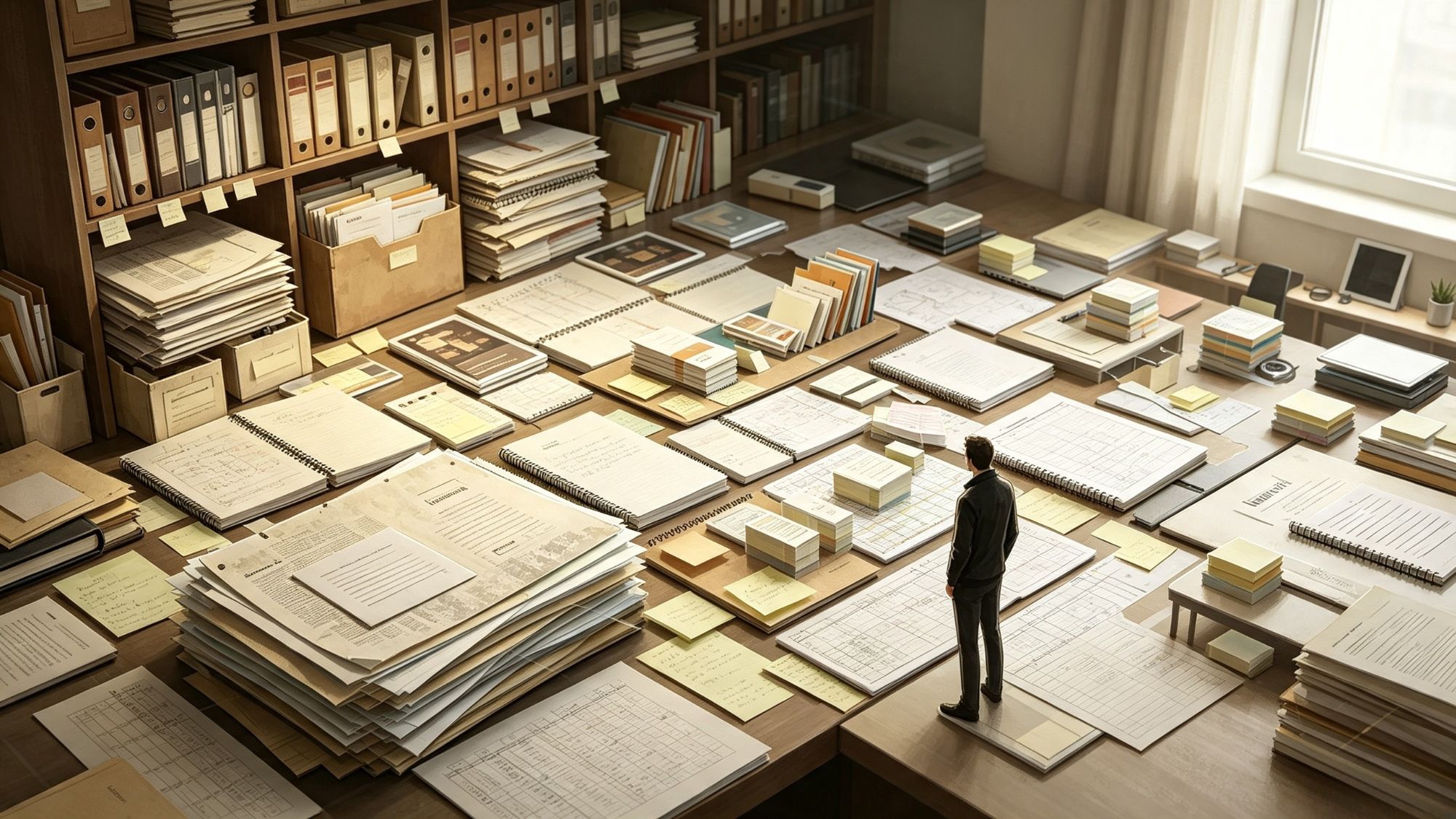
Personal knowledge systems are sometimes compared to gardens that require regular care. While the comparison is useful, excessive maintenance can become counterproductive.
A knowledge base should not require constant cleaning to remain valuable. Instead, refinement should happen when information becomes relevant.
Not every note needs to be polished immediately.
A quick meeting summary, a rough idea, or a saved article can remain in an unfinished state until there is a reason to revisit it. Trying to perfect every captured item creates unnecessary workload and slows down the creative process.
The important question is not:
“Is every note beautifully organized?”
The better question is:
“Can I find and use valuable information when I need it?”
The most effective time to improve a note is usually when you need it.
For example, if an old research note becomes useful for a new article or project, that is the right moment to add context, create links, or rewrite the idea more clearly.
This approach ensures that effort is invested in information that has current value rather than spending hours improving forgotten material.

A sustainable system should reduce unnecessary decisions and allow information to flow naturally.
Deep folder hierarchies often create uncertainty because a single note may relate to multiple topics.
A research note about artificial intelligence in healthcare, for example, could belong to technology, medicine, business strategy, or ethics. Choosing only one category may hide other possible connections.
Simple folders combined with search, tags, or links usually provide enough structure without forcing every piece of information into a single location.
Templates are useful when they remove repetitive work. However, overly detailed templates can create unnecessary friction.
A practical note template may only require:
A clear title
Basic context
The main idea or information
Additional fields such as status, priority, categories, or detailed metadata should only be added when they provide real value.
A flexible system is easier to maintain over months and years.
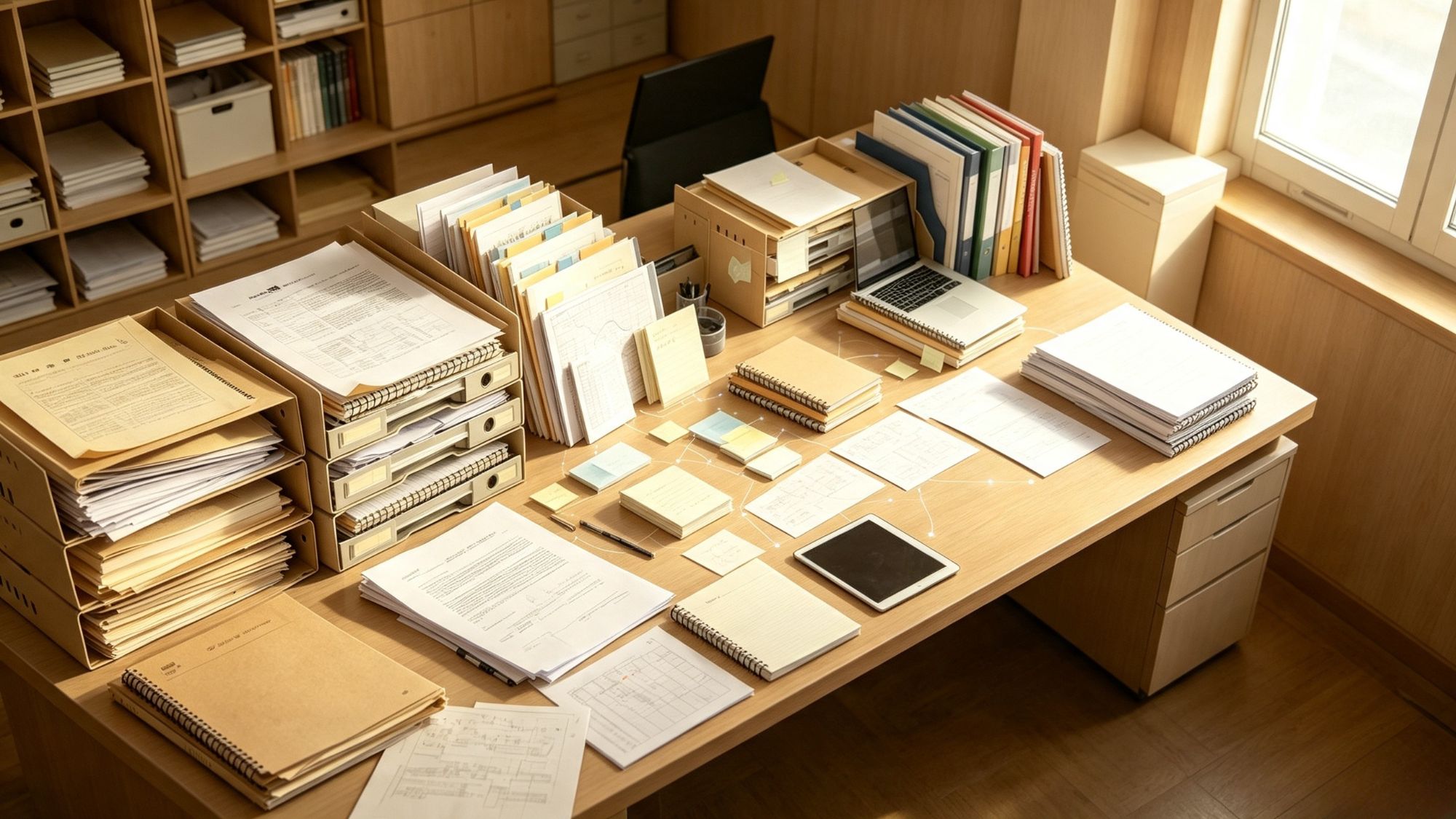
Long-term knowledge management depends more on consistent habits than complicated systems.
Some productivity methods recommend long weekly review sessions to process every unfinished note. While reviews can be helpful, a strict schedule may become difficult to maintain.
A lighter approach is often more sustainable. Spend a few minutes occasionally reviewing recent captures, or process notes naturally when they become connected to current work.
The goal is progress, not achieving a perfectly empty inbox.
One of the most difficult habits in knowledge management is letting information go.
People often keep old notes because they believe they may become useful someday. However, outdated documents, abandoned ideas, and temporary information can gradually reduce the clarity of a system.
Deleting unnecessary material is not losing knowledge. It is maintaining a workspace where important information remains easier to discover.

A personal knowledge base should function as a support system for thinking, learning, and creating—not as another task that requires constant administration.
The most sustainable systems are usually built on simple principles: capture ideas quickly, organize only when necessary, improve notes during active use, and remove information that no longer provides value.
By reducing unnecessary maintenance and focusing on practical retrieval, a personal knowledge system can remain useful for years without becoming a burden. The purpose of collecting knowledge is not to create the largest archive possible, but to make better decisions and produce better work with the information already available.
