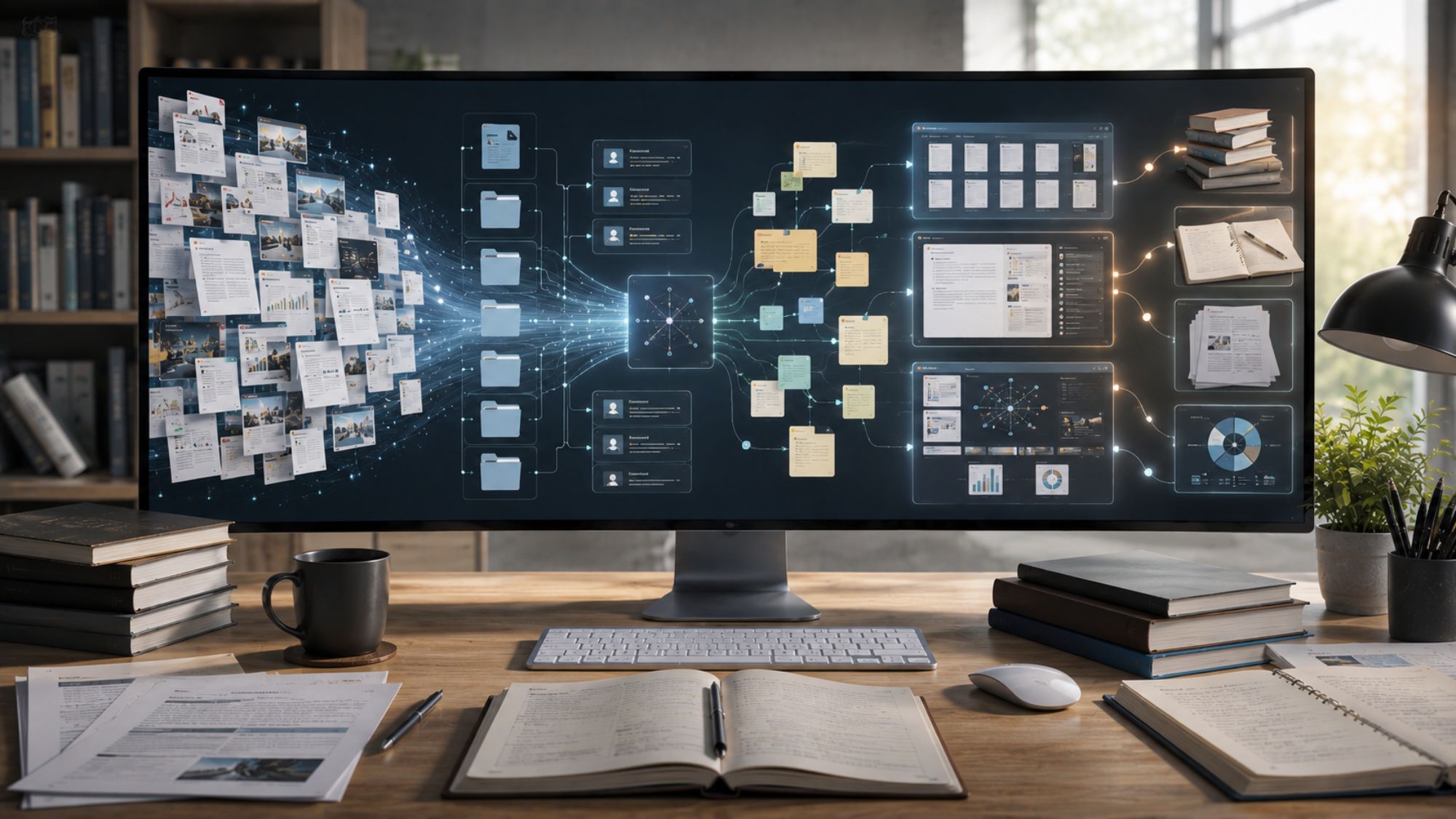
Anyone involved in research, academic writing, or long-form content creation eventually faces the same challenge: valuable information becomes difficult to find. Download folders fill with unnamed PDFs, browser tabs accumulate, and useful web sources disappear beneath newer discoveries.
The problem is not a lack of information. Modern users can access thousands of research papers, articles, and digital resources within minutes. The real challenge is creating a system that keeps important sources organized, searchable, and connected to future projects.
A reliable research library is more than a storage folder. It should help users preserve original materials, extract important ideas, and transform collected information into usable knowledge.
Research materials often become difficult to manage because they come from different sources and formats. Academic papers usually include structured information such as authors, publication dates, and citations. Web articles may change over time, while notes, screenshots, and saved links often lack consistent organization.
Using the same storage method for every type of resource creates confusion. A peer-reviewed paper used for academic writing requires different handling from a general article saved for background research.
A practical research workflow usually includes three stages:
Collection: Saving useful papers, articles, and references.
Organization: Adding names, metadata, and proper storage locations.
Synthesis: Connecting sources with personal notes and ongoing work.
Separating these stages prevents a research library from becoming a simple archive where information is stored but rarely used.
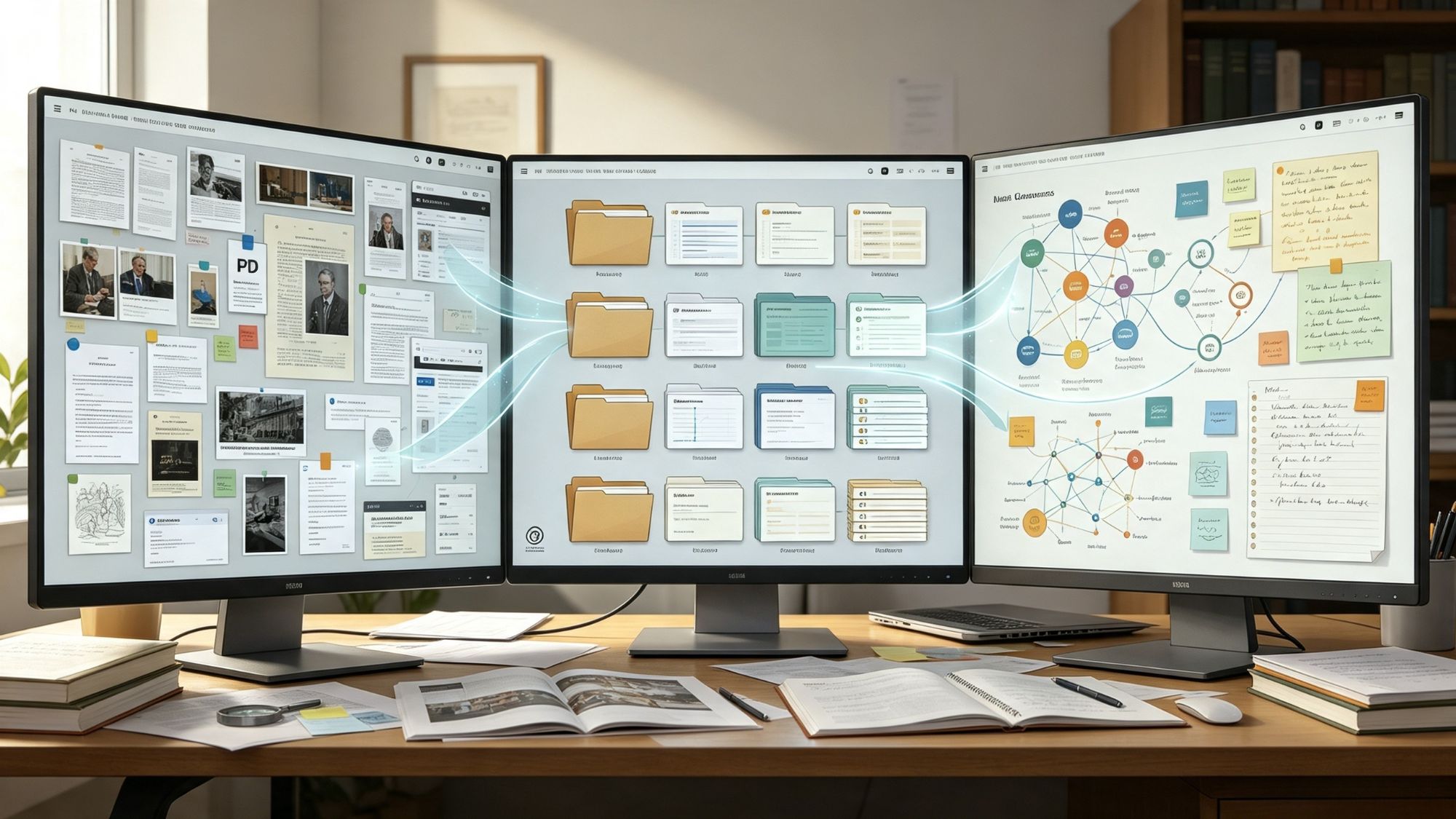
Different tools serve different purposes. Some focus on managing references, while others help users connect ideas and develop insights.
Reference management applications such as Zotero, Mendeley, and EndNote are designed for organizing academic sources.
Their main advantage is handling bibliographic information. These tools can often capture details such as titles, authors, publication dates, and identifiers from academic websites. They also help generate citations and bibliographies in commonly used academic formats.
For users managing large collections of research papers, reference managers reduce manual organization work and keep source information consistent.
Knowledge management tools such as Obsidian and Logseq approach research from a different perspective.
Instead of focusing mainly on citations, these systems help users summarize sources, connect related ideas, and develop personal insights. They are particularly useful for writers, researchers, and professionals who need to combine information from multiple sources.
Many advanced workflows combine both approaches: reference managers handle source storage, while knowledge systems support analysis and idea development.
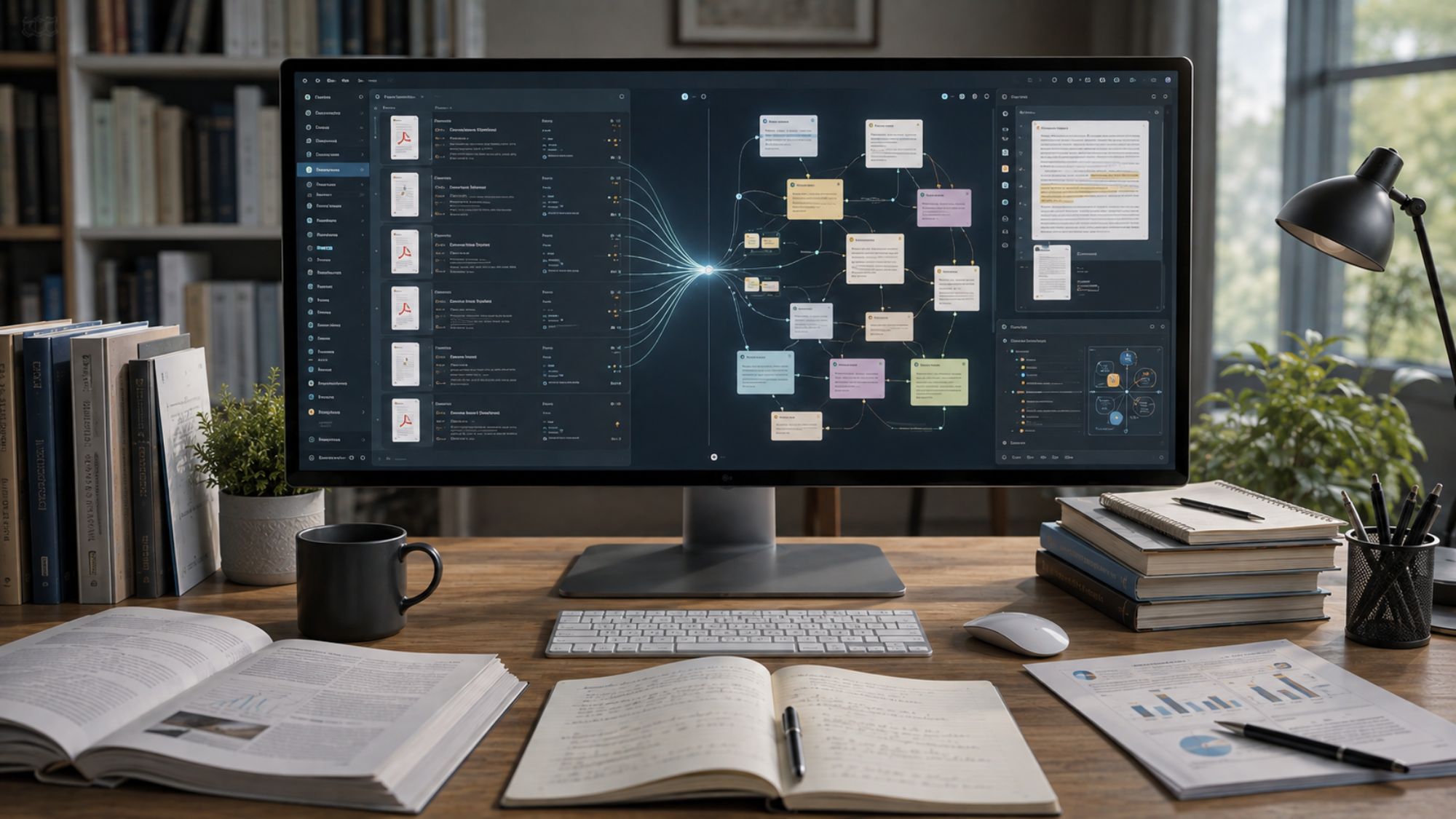
Even with specialized software, file naming and storage habits remain important. Generic names such as “paper_final.pdf” or “document_new.pdf” quickly become difficult to identify later.
A simple naming structure improves long-term accessibility:
Author_Year_ShortTitle.pdf
Example:
Kahneman_2011_ThinkingFastAndSlow.pdf
This format makes documents easier to search across local storage, cloud drives, and backup systems.
Folder structures should also remain practical. Instead of creating complicated categories for every possible topic, organize files around workflow needs:
Active research projects
Reference materials
Archived projects
Unprocessed downloads
A simple structure reduces maintenance and makes important resources easier to locate.
Web sources require extra attention because online content can change or disappear. A useful bookmark today may lead to a missing page months later.
For important online resources, consider these practices:
Save important pages locally: Export valuable articles as PDFs or Markdown files when appropriate.
Record source details: Include titles, authors, dates, and original links.
Add personal notes: Explain why the source matters and how it connects to your work.
A saved link without context often loses its value over time. Adding a short explanation makes future retrieval much easier.
A large collection of PDFs does not automatically create understanding. Research becomes valuable when information is processed and connected with existing knowledge.
A useful system separates materials into three layers:
Source Layer
The original research paper, article, or webpage. Keep these materials unchanged as references.
Summary Layer
Personal notes explaining the main arguments, findings, and important details in your own words.
Knowledge Layer
New ideas, connections, and conclusions created by combining information from multiple sources.
This approach prevents a common problem: collecting documents without actually learning from them.
Writing short summaries after reading a paper encourages deeper understanding and makes future research more efficient.
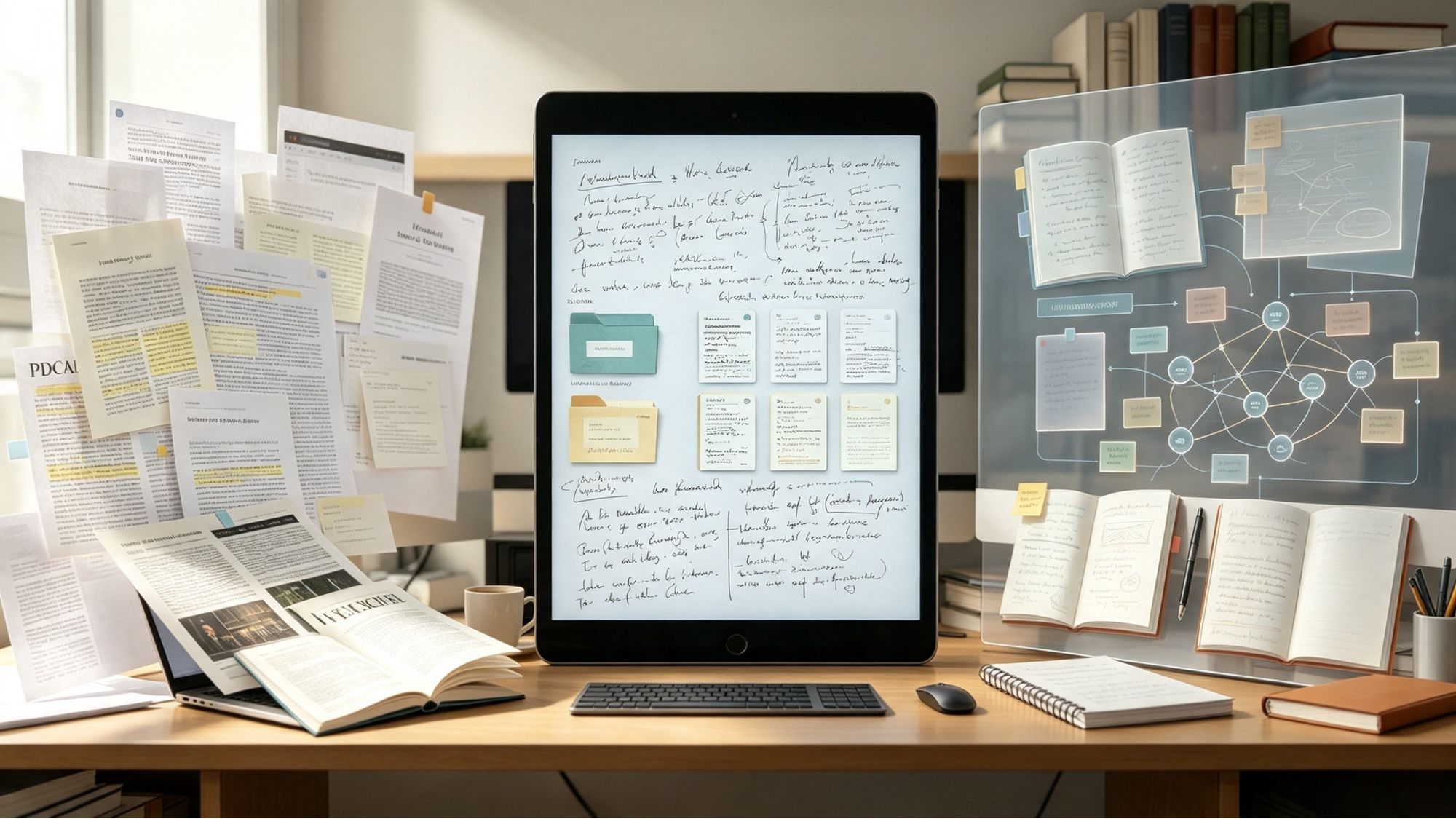
A research library requires occasional maintenance. Without review, duplicate files, outdated materials, and unused sources can gradually reduce efficiency.
Useful maintenance habits include:
Remove duplicates: Delete repeated PDFs and unnecessary copies.
Archive completed projects: Move finished research materials away from active workspaces.
Maintain backups: Protect reference databases and important documents with reliable backup systems.
The goal is not to build the largest possible archive. A smaller, organized library is often more valuable than thousands of forgotten files.

Organizing research papers, PDFs, and web sources is not simply a matter of storing more information. The real goal is creating a system that helps users find, understand, and reuse valuable knowledge.
By combining reference management tools, consistent file organization, web preservation practices, and personal note-taking methods, scattered digital resources can become a reliable research foundation.
A well-designed research library does more than store information. It supports better thinking, faster writing, and more effective knowledge creation over time.
