Checking a smartphone can become almost automatic. A notification appears, a message comes in, or a browser tab flashes with something that seems worth reading, and attention shifts before there is much time to think about it. Digital connectivity makes many parts of daily life easier, but constant interruptions can also make it harder to stay with one demanding task for very long.
The issue is not that smartphones, email, or online platforms are inherently harmful. Digital tools can make communication faster, provide access to useful information, and support learning and work. The problem arises when several streams of information compete for attention at the same time. Research on working memory, media multitasking, divided attention, and decision-making offers useful clues about why that experience can feel so mentally exhausting.
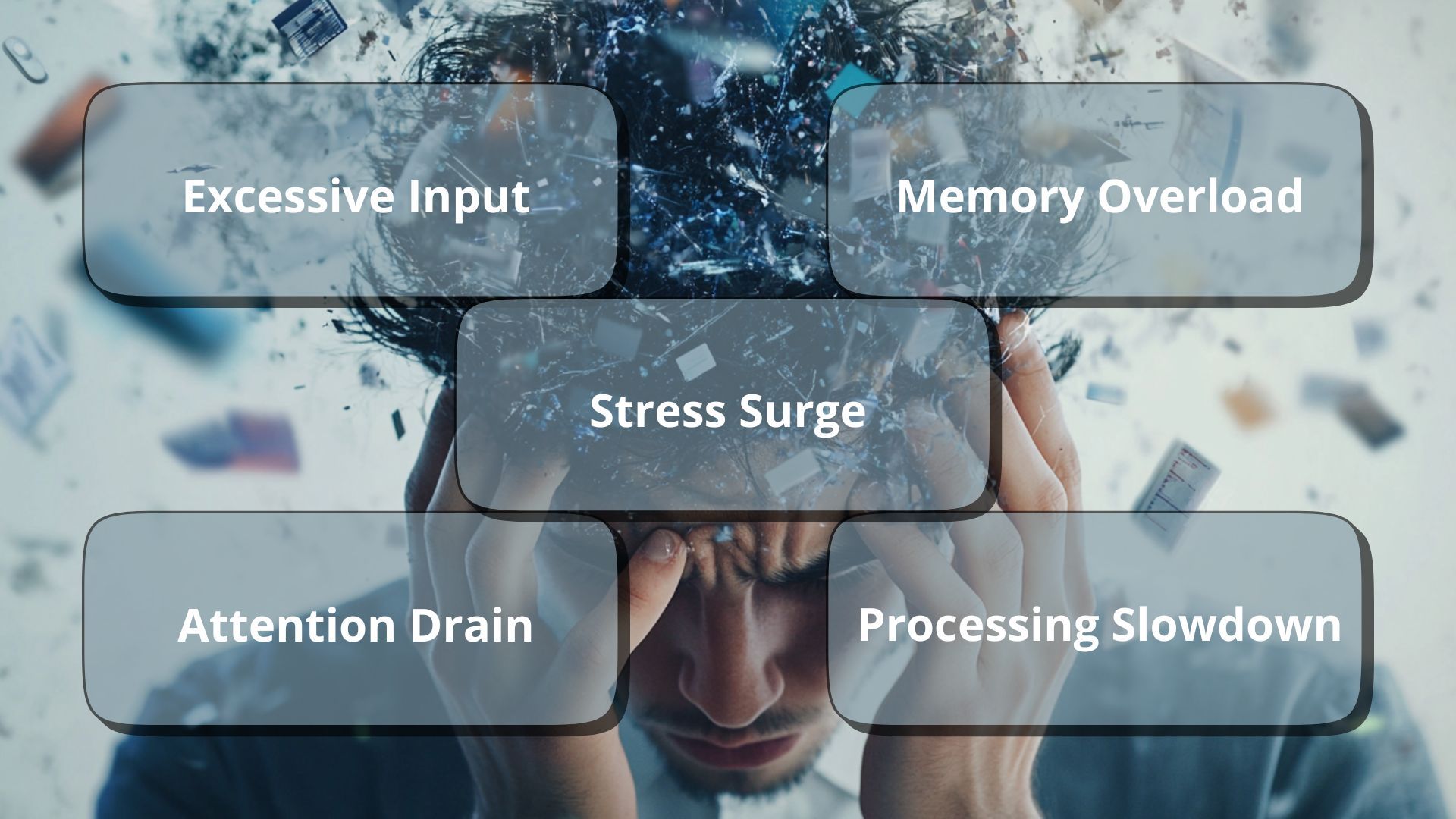
Working memory acts as a temporary mental workspace. It allows people to hold information in mind while using it to solve a problem, understand a paragraph, follow instructions, or make a decision. Its capacity is limited, which means that complex tasks become harder when unrelated information keeps competing for that same mental space.
Consider a typical work session: a report is open on one screen, email notifications are arriving, a workplace chat window is active, and several browser tabs are waiting in the background. It may feel like all of these tasks are being handled simultaneously, but demanding mental activities generally require the brain to shift attention between them rather than process every stream fully in parallel.
Those shifts are not free. When attention moves away from a task, some of the information needed to continue that task has to be reconstructed when attention returns. The interruption may take only a few seconds, yet the mental context can take longer to recover. Repeated throughout a work session, these small disruptions can make complicated work feel noticeably harder.
Research on media multitasking has found associations between heavier media multitasking and differences in working memory, distractor filtering, and long-term memory. One study, for example, found that heavier media multitaskers performed less well on several working-memory measures and that working-memory performance was related to long-term memory performance. These findings are important, but they do not establish that media multitasking itself causes lasting cognitive decline. Researchers have also noted that the evidence across studies is mixed and that the direction of causality remains an open question.
That distinction matters. Digital distraction may interfere with the process of encoding information, especially when attention is repeatedly pulled away while someone is trying to learn or remember something. But it would be too strong to conclude that ordinary smartphone use permanently damages memory.
Attention determines which information receives enough mental processing to be understood and remembered. When attention is divided, less of it may be available for the original task. Digital environments can make this particularly noticeable because messages, alerts, feeds, and other forms of incoming information are designed to remain easy to access.
Psychologists have long distinguished between forms of attention such as sustained attention, which involves maintaining focus over time, and selective attention, which helps filter competing information. Digital multitasking can challenge both, particularly when the tasks involved require active thinking rather than simple routine actions.
Linda Stone, a former technology executive and writer, used the phrase continuous partial attention to describe a pattern of remaining alert to multiple streams of information rather than giving one activity complete attention. The concept is related to multitasking but places more emphasis on staying connected and monitoring the environment for something that might require attention.
That description fits a familiar experience: reading a long article while wondering whether a message has arrived, working on a spreadsheet while periodically checking a news feed, or writing an email while keeping several other conversations open. Nothing necessarily demands an immediate response, yet part of the mind remains prepared for the next interruption.
Over time, that habit can make uninterrupted work feel less comfortable. This does not mean that the brain has permanently lost its ability to concentrate. It does suggest that attention is influenced by repeated practice and by the environment in which a task takes place. A person who spends much of the day switching between short bursts of information may find a long, uninterrupted task more demanding simply because it requires a different style of attention.
Research on media multitasking supports some of this concern, while also highlighting important limitations. Reviews of the literature generally find that heavier media multitaskers show poorer performance in certain cognitive tasks, particularly those involving sustained attention and interference control, but the results are not uniform. Some studies find little or no difference, and researchers continue to investigate whether multitasking produces these differences or whether people with particular attentional tendencies are simply more likely to multitask.
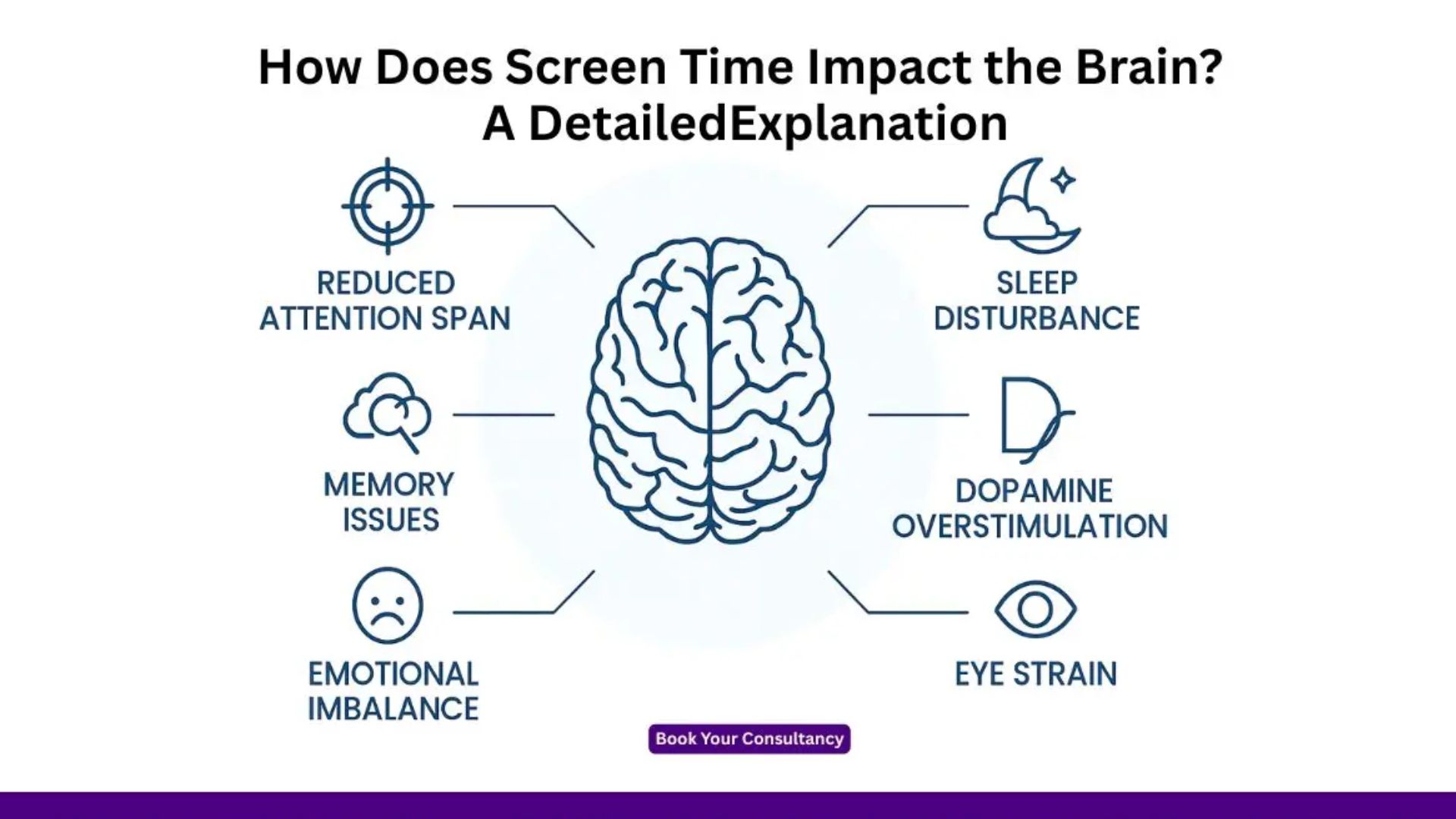
The problem with digital overload is not limited to attention. Online environments also increase the number of choices and information sources available during ordinary decisions.
Choosing a laptop, comparing insurance options, researching a service, deciding which email deserves a response, or evaluating a long list of customer reviews can quickly turn a simple decision into an information-management exercise. More information can be useful, but there is a point at which additional alternatives stop making the decision easier.
Psychologists and behavioral researchers use the term choice overload to describe situations in which the number or complexity of available alternatives becomes difficult to manage. Research suggests that excessive choice can sometimes increase decision deferral, reduce confidence, or make the final decision less satisfying. The effect is not automatic, however. The quality of the options, the difficulty of the task, the person's familiarity with the subject, and the way choices are presented can all influence the outcome.
A related concept is decision fatigue, which describes the feeling that repeated or demanding decisions have become mentally taxing. The idea is widely discussed in psychology and behavioral research, but it should not be treated as proof that every small decision permanently drains a fixed supply of mental energy. Researchers continue to refine how decision fatigue should be defined and measured.
Digital environments can make this problem more noticeable because choices arrive continuously. Which notification should be opened? Which message needs a response? Is another review worth reading? Should another search be performed before making a purchase? None of these decisions is necessarily important on its own. Together, however, they can create a steady stream of small judgments that competes with more meaningful work.
The practical problem is often less about the number of decisions themselves and more about the lack of clear boundaries between them. When every spare moment can be filled with another piece of information, there is little natural stopping point.
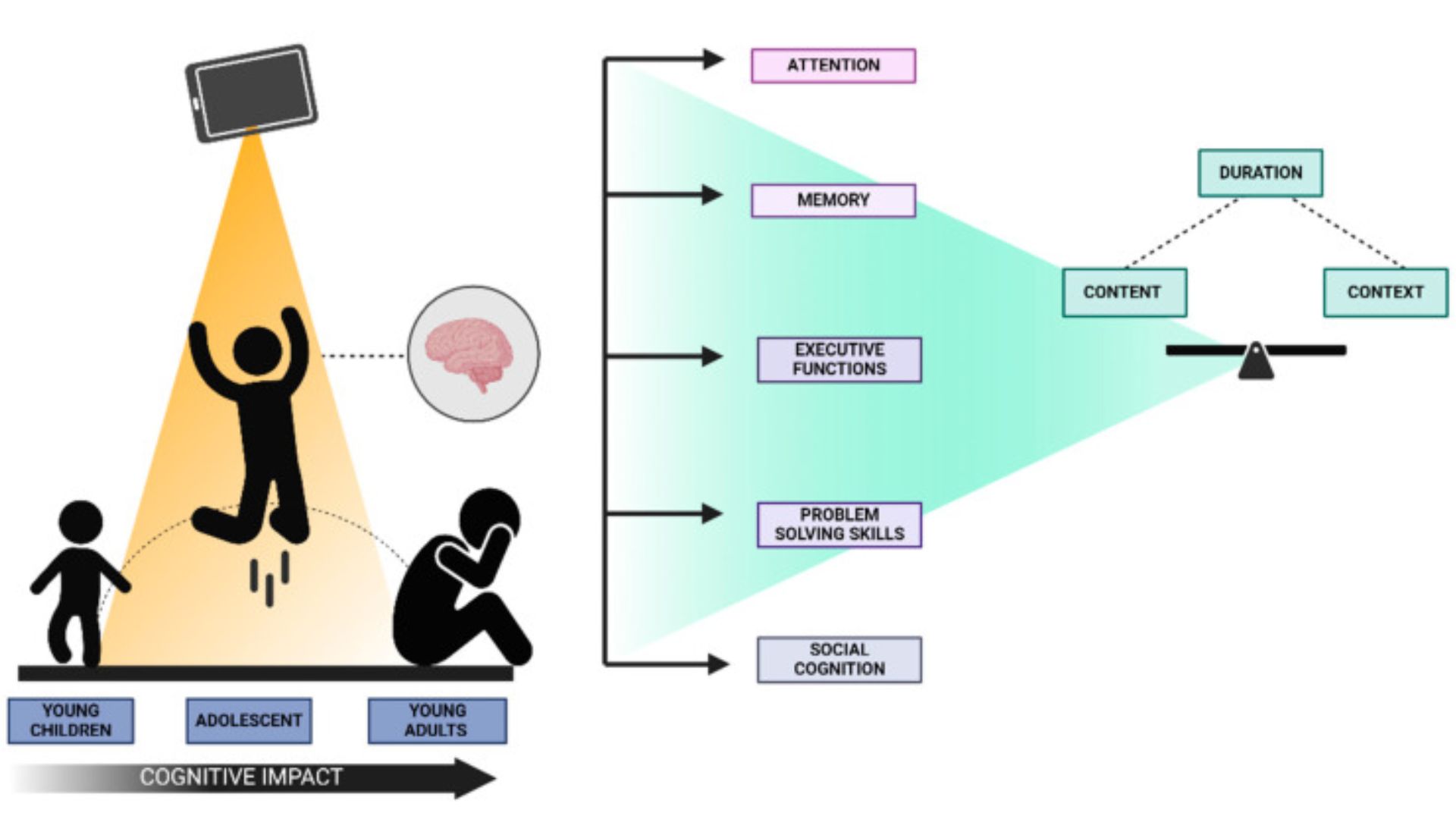
The answer does not have to be a complete digital detox. For most people, digital tools are too useful to abandon, and many are essential for work, education, communication, and everyday tasks. A more realistic approach is to reduce unnecessary interruptions and give demanding activities enough uninterrupted space.
Protect focused work periods. Closing unrelated browser tabs and temporarily silencing nonessential communication can reduce the number of times attention is pulled away from the main task. The goal is not perfect concentration; it is simply to make concentration easier.
Audit notifications. Many alerts are not urgent and do not require an immediate response. Promotional messages, routine updates, social-media badges, and other nonessential notifications can often be disabled or grouped together. Fewer interruptions mean fewer decisions about whether an interruption deserves attention.
Create physical distance when concentration matters. Leaving a phone outside the immediate work area can add a small amount of friction between the person and the device. That can make habitual checking less automatic and create a clearer boundary between focused work and casual browsing.
Reduce unnecessary information gathering. More research is not always better research. For routine decisions, defining a few criteria in advance can prevent endless comparison. A clear stopping rule—such as comparing a reasonable number of credible sources—can be more useful than continuing to collect information indefinitely.
Leave some periods unfilled. Quiet moments have value even when they produce no measurable output. A walk without constant notifications, a meal without a screen, or a few minutes spent reading without switching between apps can provide a break from rapid information changes. The point is not to create a new productivity challenge, but to give attention a chance to settle.
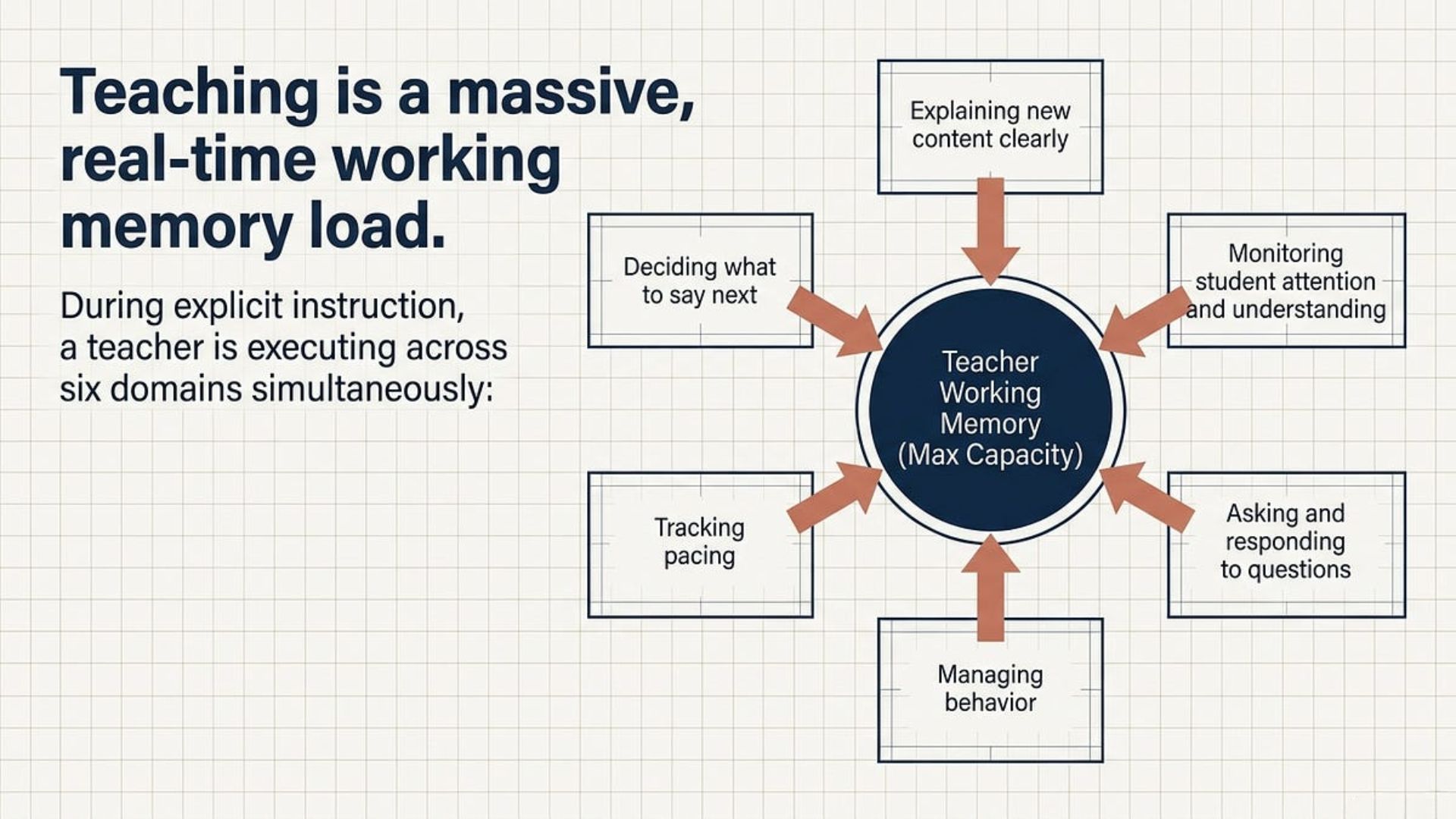
Digital technology is not the enemy of attention. The more useful question is how digital environments shape the conditions under which attention is used.
Research on media multitasking suggests that frequent switching and competing streams of information can be associated with weaker performance in some areas of cognition, particularly attention and working memory. At the same time, the evidence does not justify sweeping claims that smartphones or online services permanently damage the brain. Individual habits, task demands, personal differences, and the design of the digital environment all matter.
That makes the goal fairly simple: technology should remain a tool rather than become the default destination for every spare moment.
Protecting a period of uninterrupted attention, reducing unnecessary alerts, and putting reasonable limits on information gathering are small changes, but they address the problem at its source. Instead of trying to eliminate connectivity, the better approach is to decide when connectivity is useful—and when uninterrupted attention is worth protecting.
